문고리 하나 악수 한 번
Knock, Knock
청주미술창작스튜디오
한국예탁결제원KSD갤러리
2018
Solo Exhibition
기간_2018.07.12~2018.07.21
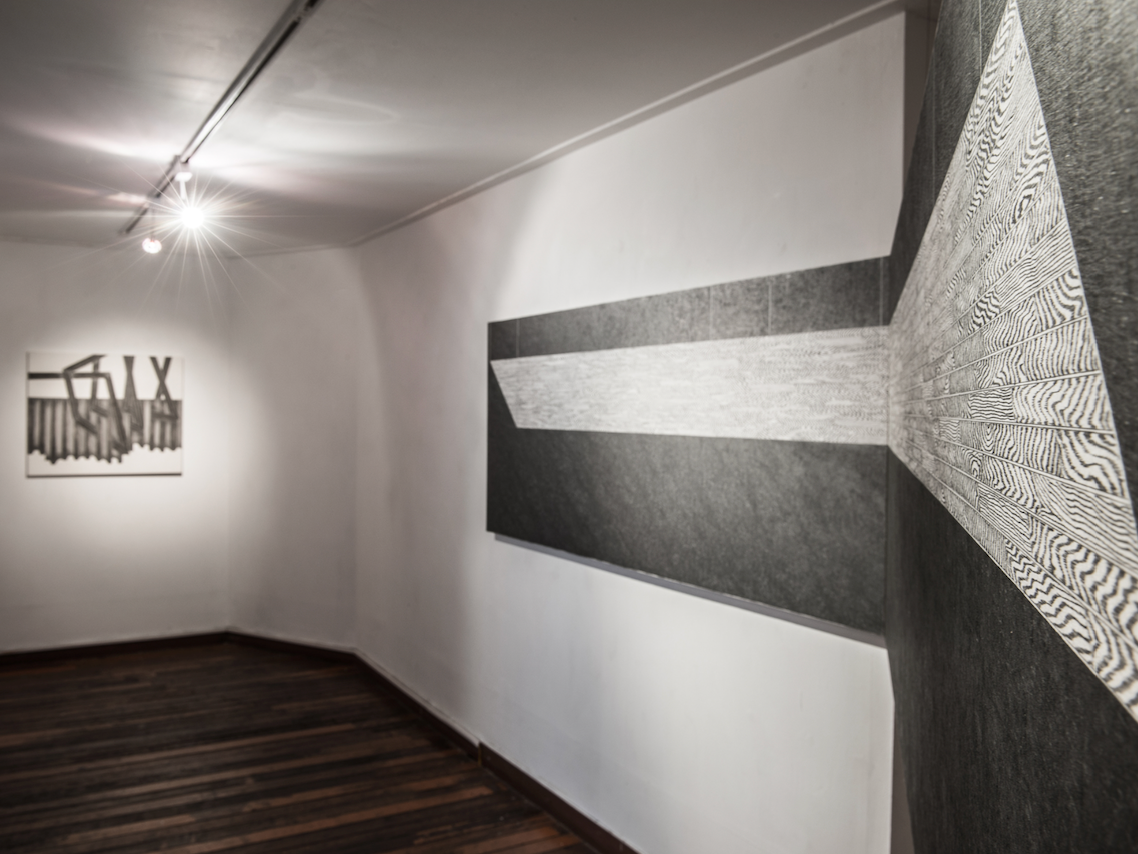
장소_청주미술창작스튜디오
주최/주관_청주시, 청주시립미술관, 청주미술창작스튜디오
Period_July.12~July.21. 2018
Venue_The Cheongju Art Studio
Hosted by Cheongju city, Cheongju City Museum of Art, The Cheongju Art Studio
기간_2018.11.01~11.23
장소_한국예탁결제원KSD갤러리
주최/주관_한국예탁결제원, KSD나눔재단, KSD갤러리
Period_November.01~November.23.2018
Venue_Korea Securities Depository((KSD) Gallery
Hosted by Korea Securities Depository, KSD Foundation, KSD Gallery
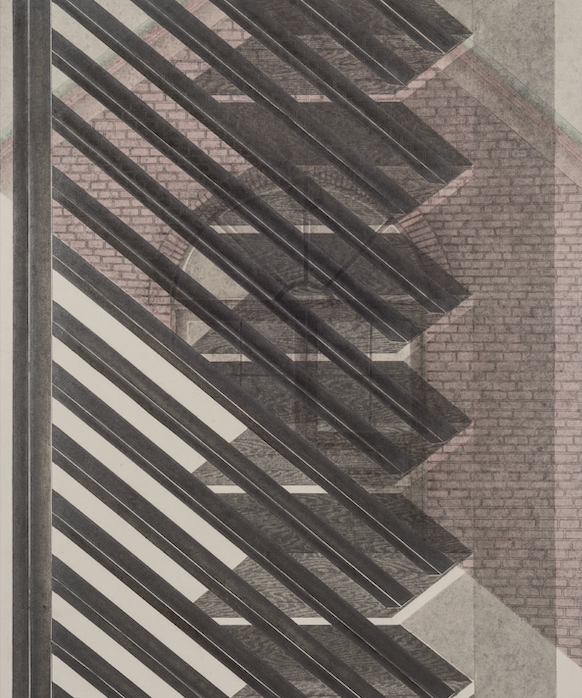
문고리 하나, 악수 한 번
김혜숙
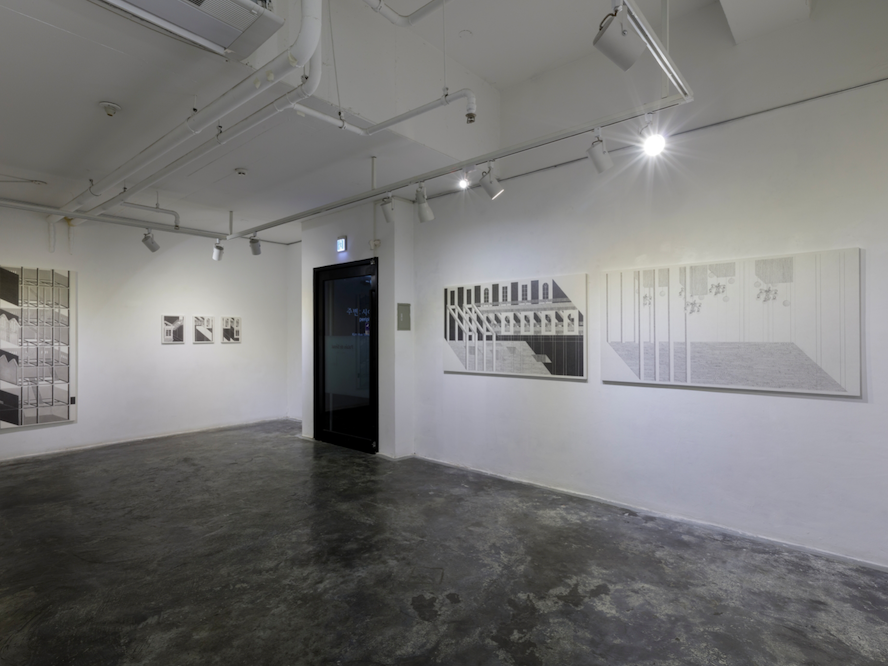
<문고리 하나, 악수 한번>은 낯선 공간과 시간에 관한 이야기이다. 군산 작업의 연장선으로 이곳에서도 건축공간과 시간을 드러내는 이미지에 대한 고민이 있었다. 하지만 청주는 또 다른 공기를 지니고 있었다.
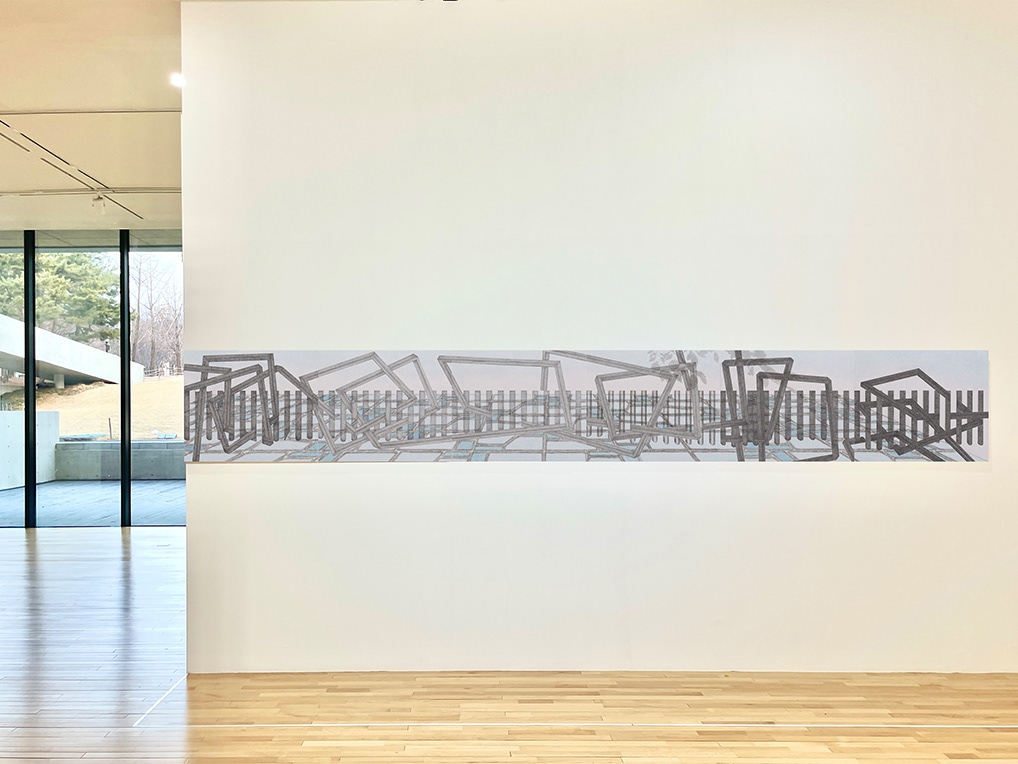
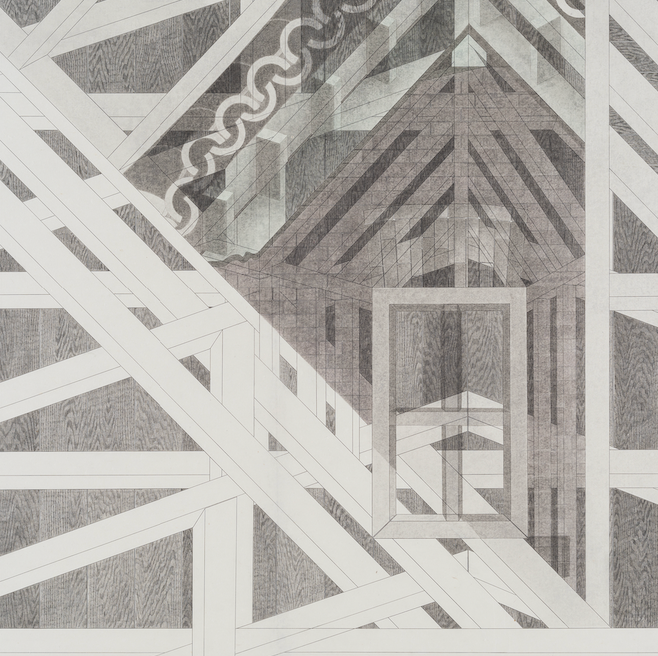
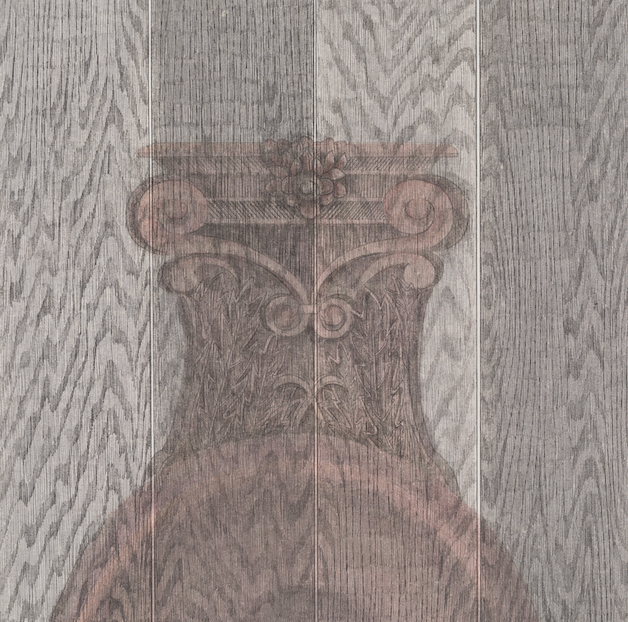
군산에서와 마찬가지로 청주도 비슷한 시기에 지어진 근대의 건축을 조사하였다. 군산에서 그 시기의 건축물로부터 시작하였기에 기존에 해오던 작업 방식으로의 유사성을 찾을 수 있을 거라는 생각을 했기 때문이다. 하지만 드나듦이 빠른 항구도시와는 다르게 청주가 지닌 평온한 도시의 특성은 익숙하게 보았던 기둥이나 벽돌까지도 낯설게 보이게 했다. 이곳에서는 기존의 표현방식이 어울리지 않는다는 생각이 들었다. 이전 작업이 보이는 대로가 아닌 보여주고 싶은 장면에 관한 이야기로 시작되어 공간을 전개도처럼 펼쳐 보여주었다면, 청주 작업은 시간을 표현함에 있어 사용하고 있는 ‘선’(Line)이라는 매개체를 통해 여러 층을 쌓아 바라본 청주의 기록과 기억에 대한 조형적인 고민을 담고 있다.
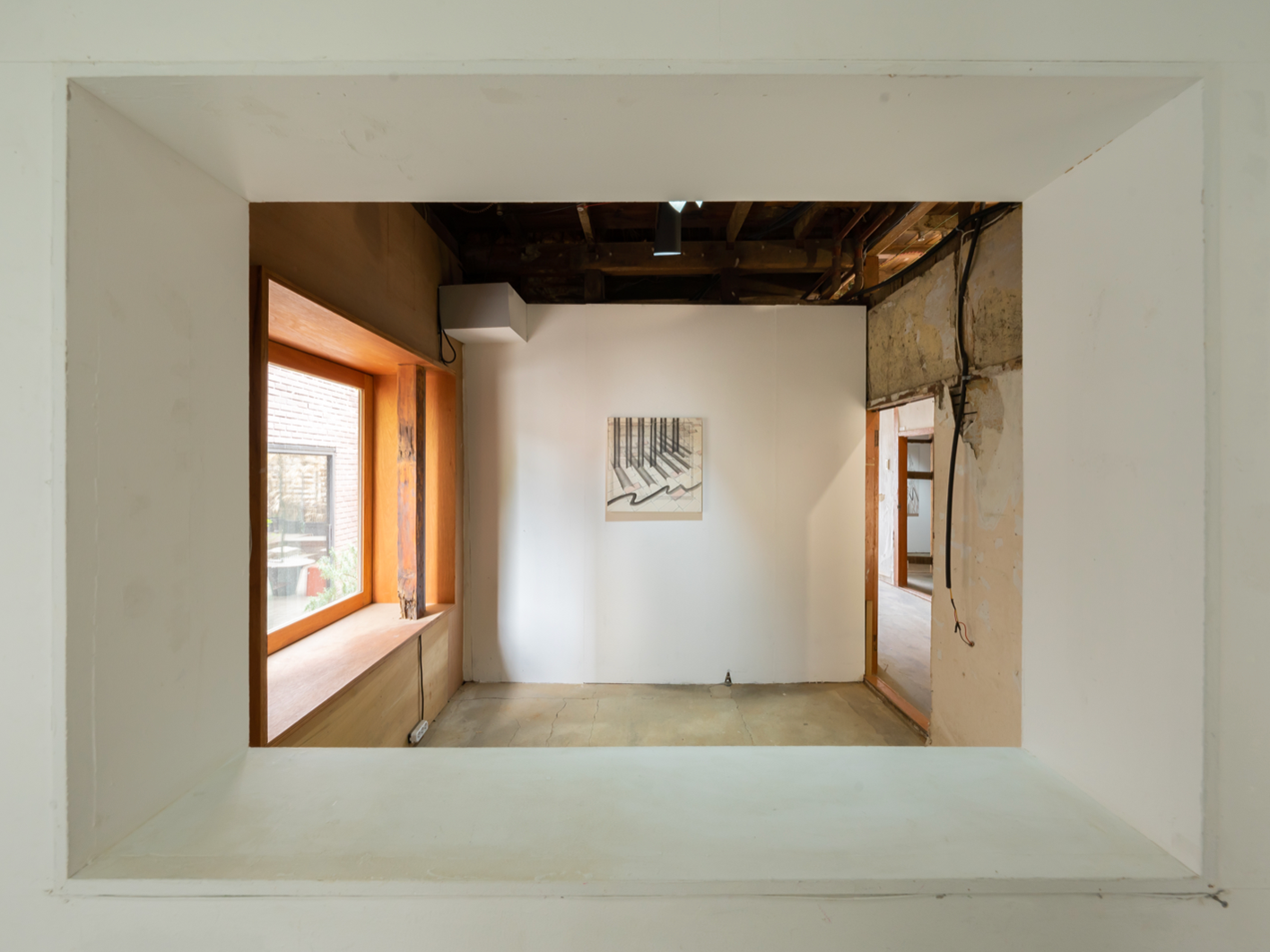
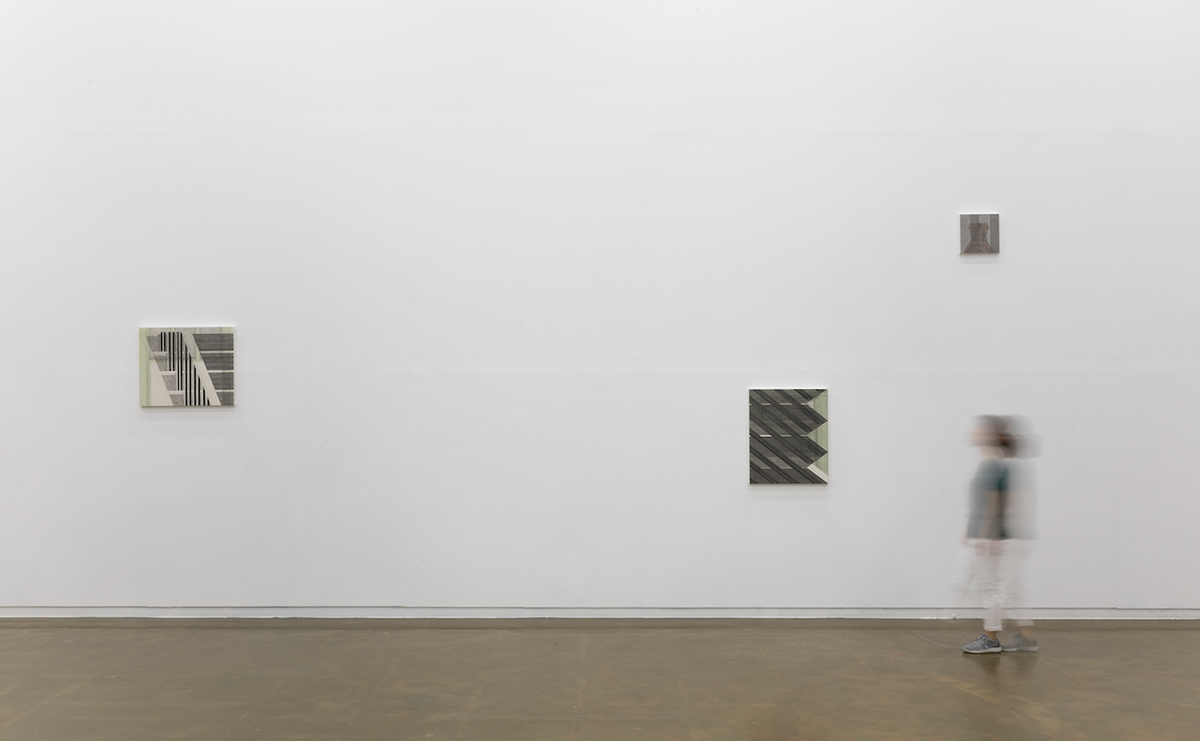
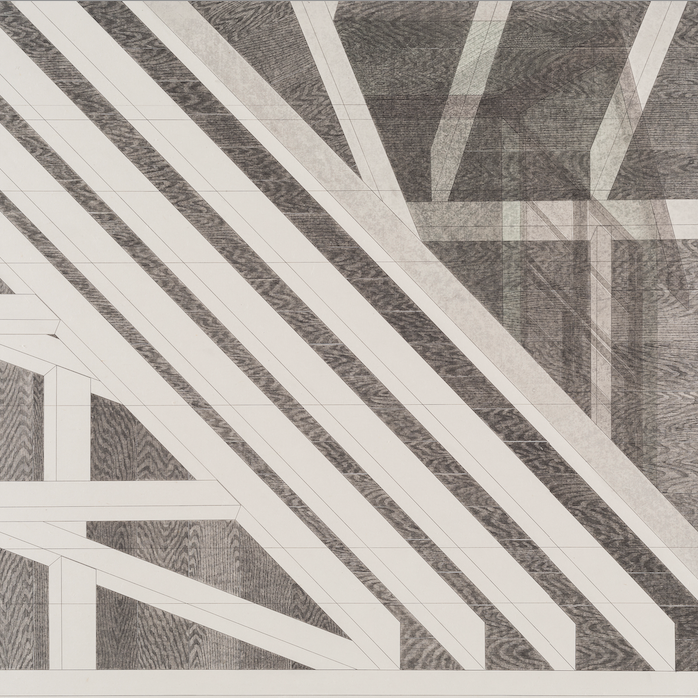
이번에도 메인재료는 샤프펜슬이다. 펜슬이 주는 기록적인 느낌과, 여리지만 굵기의 변화가 적고 명확하지만 언제든 지울 수 있는 특성은 생각의 얇은 틈을 만들어 주고 변화에 대한 두려움을 잠시 잊게 한다. 무엇을 바라보고, 어떤 생각을 하고, 처한 현실에 따라 바라보는 이미지들 사이에는 선택과 소외가 발생한다. 결국 나는 그것을 기억으로 기억한다. 이번 전시는 청주의 탑동 양관에서 볼 수 있었던 과거에 대한 기록으로 그 틈 사이에 존재하는 현재의 모습에 관한 나의 기억의 이야기이다.
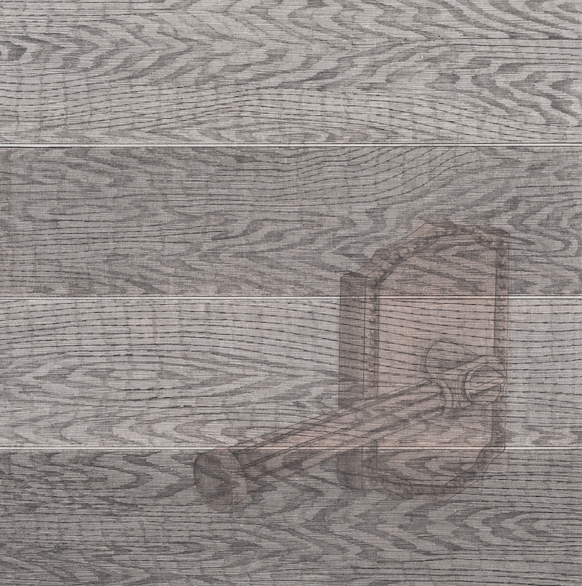
〈Knock, Knock〉
By Kim Hyesook
〈Knock, Knock〉 is a story about unfamiliar spaces and time. As an extension of my work in Gunsan, I continued to explore images that reveal architectural space and time in Cheongju. However, Cheongju carried a different atmosphere.
As I did in Gunsan, I researched modern buildings in Cheongju that were constructed around a similar period. Because my earlier work began with architecture from that era in Gunsan, I initially expected to find similarities by using the same working method. However, unlike a port city marked by constant movement and exchange, the calm character of Cheongju as a city made even familiar elements—such as columns and bricks—appear unfamiliar. I came to feel that my existing modes of expression were not suited to this place. Whereas my previous work began with scenes I wanted to present rather than what was simply seen, unfolding space like an architectural elevation, The Cheongju project contains a formal consideration of Cheongju’s records and memories, viewed through multiple layers built up via the medium of the “line,” which I use as a means of expressing time.
Once again, the main material is the mechanical pencil. Its recording quality, along with its delicate yet consistent line—clear, with little variation in thickness, and always erasable—creates narrow gaps in thought and allows me to temporarily forget my fear of change. Depending on what I look at, what I think, and the reality in which I am situated, choices and exclusions occur between the images I perceive. In the end, I remember these images as memory. This exhibition is a story of my memory: a record of the past as it could be seen at the Western-style Buildings, Tap-dong, Cheongju, and of the present that exists in the gaps between those records.
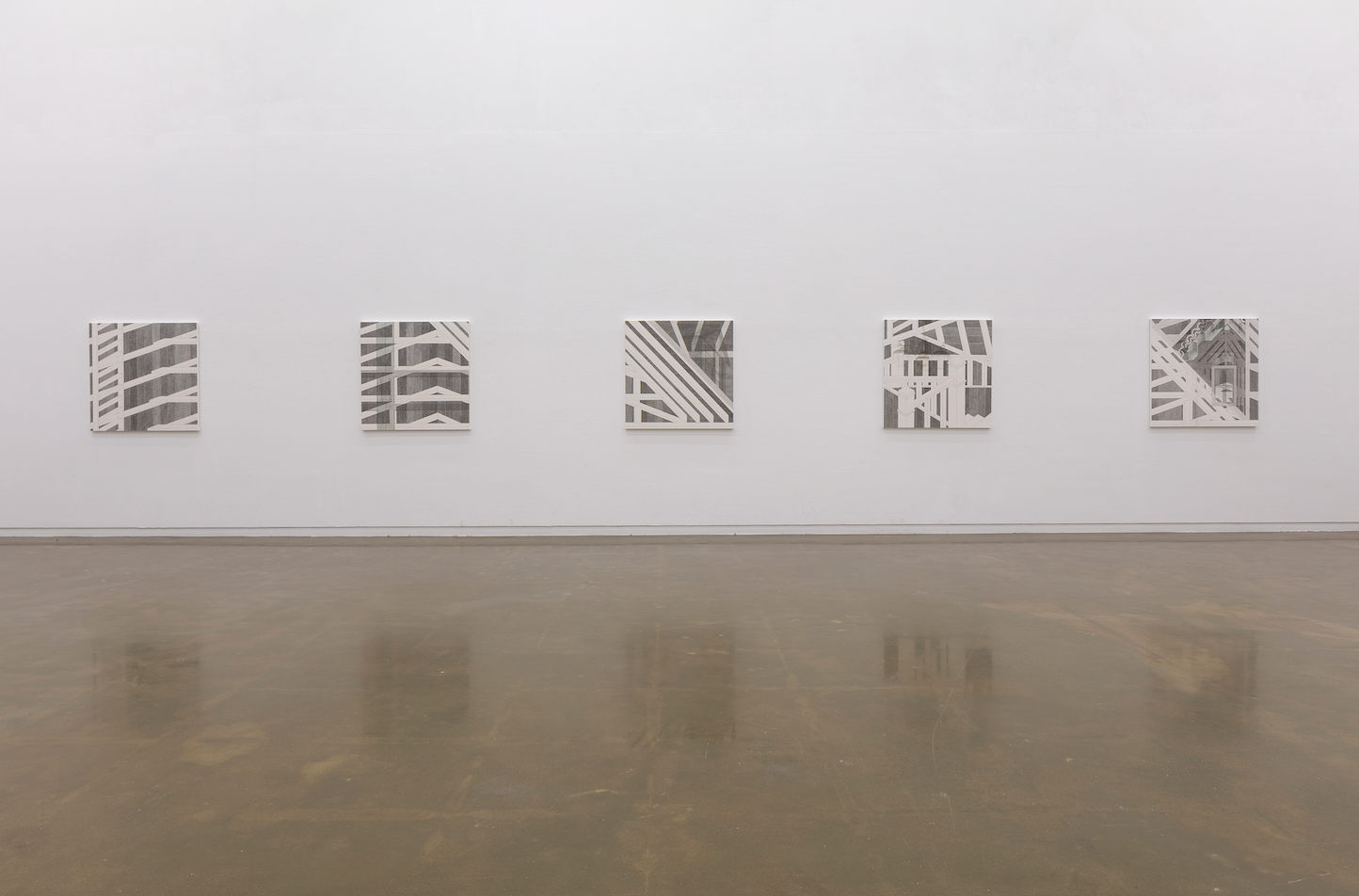
청주미술창작스튜디오는 입주기간동안 예술가의 작품 성과물을 프로젝트 형식으로 선보이는 2018-2019 아티스트 릴레이 프로젝트를 개최한다. 아티스트 릴레이 전시는 개별 스튜디오에서 작업했던 결과물을 바탕으로 하는 개인전 작가의 새로운 감각과 역량을 보여주고자 진행된다. 작가의 개인 작업에 집중하며 작품에 대한 의미와 방향을 새롭게 재고해보는 시간을 갖고자 함으로 작가의 아이디어, 실험적인 이미지, 불완전한 예술적 의미 등 첨예한 문제에 대한 다양한 지점을 되새김질하는 기회가 될 것이다. 이와 함께 현장을 찾는 관람객들에게 ‘우리 시대의 예술이란 무엇인가’ 라는 질문을 던진다.
올해 첫 번째 릴레이 프로젝트 전시로 김혜숙 작가의 전시를 개최한다. 김혜숙 작가는 청주라는 도시에 발을 내딛어 근대 건축물에 주목하여 새로운 문을 두드린다. 공간의 장소성과 그것이 지닌 기억에 대한 리서치는 작가의 작품 활동에 커다란 비중을 차지하고 큰 맥을 만들고 다시 선으로 풀어낸다. 공간의 흐름을 선을 통해 보여주면서 동시에 그 공간에 들어가고 싶다는 촉각적 욕구를 함께 이끌어 내고자 한다.
전시명 ‘문고리 하나, 악수 한 번’은 작가의 전반적 작업에 기초가 되는 유하니 팔라스마(Juhani Pallasmaa)의 《건축과 감각》에 쓰인 피터 맥키스(Peter Mackeith)의 글에서 쓰인 구문을 차용한 것으로 작가는 전시를 통해 새로운 문으로 들어가는 연결통로(고리)가 되어 관람객에게 악수를 청한다.
우리가 보는 것을 재구성하듯 작가 역시 인식을 사물 자체로 재현하는 것이 아닌 작가의 인식 범주에 기초하여 실재를 재구성하고 이를 표현한다. 기존 작업에서 안과 밖의 모습을 펼쳐 공간의 경계를 허물어 보여주었다면 이번 전시에서는 공간의 레이어를 다층적으로 담아냈기에 뒤얽힘의 정도 그리고 입체감이 주는 깊이가 커졌다. 때문에 마치 시간이 공간처럼 휘어져 뒤얽혀진 형태로 보여진다.
이미지는 떨어진 듯 연결이 되어있고 날카로운 듯 따뜻하다. 건축 공간의 흐름을 선의 흐름으로 샤프라는 근현대 재료로 옮겨지는데, 시간이 켜켜이 쌓인 근대시기 목조 건축물과 자연스럽게 이어져 시간성을 더하며 전통적인 느낌을 배가시킨다. 건축이 지닌 물성을 시각적으로 표현하고 다시 물성으로 느끼게 하는 힘을 보는 이의 망막에 심어주는 것이다.
악수는 인사나 감사 따위의 뜻을 표하기 위해 두 사람이 각자 한손을 마주 내어 잡는 일을 의미한다. 김혜숙 작가 역시 손의 움직임(동작)에 녹아있는 생각의 결과인 작품을 통해 손을 내밀고 있다. 문고리 하나에 손을 맞잡고 공간 그리고 기억을 공유하는 시간을 가져보기를 권하는 바이다. ■ 청주미술창작스튜디오

Cheongju Art Studio hosts the 2018–2019 Artist Relay Project, in which the artistic achievements of resident artists are presented in the form of projects during their residency period. The Artist Relay Exhibition is designed to showcase the new sensibilities and capabilities of individual artists based on the results of their work in each studio. Focusing on the artist’s individual practice, the exhibition provides an opportunity to reconsider the meaning and direction of the works, revisiting various critical points such as the artist’s ideas, experimental imagery, and the incomplete artistic significance of the works. At the same time, it poses the question “What is art in our time?” to visitors.
The first exhibition in this year’s relay project features the work of Hyesook Kim. By stepping into the city of Cheongju and focusing on its modern architecture, Kim knocks on new doors. Her research on the spatial characteristics and memories embedded in these places plays a central role in her artistic practice, forming a significant framework that she then expresses again through lines. Through the flow of lines, she not only represents the movement of space but also evokes a tactile desire in the viewer to enter that space.
The exhibition title, 〈Knock, Knock〉, is borrowed from a phrase in Peter Mackeith’s writing, cited in Juhani Pallasmaa’s The Eyes of the Skin, which serves as a foundation for the artist’s overall work. Through this exhibition, Kim becomes a connecting path—a “doorknob”—inviting the audience to a handshake as they step into a new door.
Just as we reconstruct what we see, the artist does not reproduce objects as they are, but reconstructs reality based on her own perceptual framework and expresses it. While her previous work unfolded the interior and exterior of space to dissolve boundaries, this exhibition captures the layers of space in a multi-dimensional manner, increasing the depth and complexity. As a result, time appears to be twisted and intertwined as if it were a physical part of the space.
The images feel both detached and connected, sharp yet warm. The flow of architectural space is translated into the flow of lines using the mechanical pencil, a modern material, which naturally connects with the wooden buildings of the modern period where layers of time have accumulated, adding a sense of temporality and amplifying a traditional feeling. It visually conveys the materiality of architecture and impresses upon the viewer’s retina the power to perceive that materiality anew.
A handshake signifies an act in which two people grasp each other’s hands to express greetings or gratitude. Similarly, Hyesook Kim extends her hand through her work, which embodies the result of thoughts embedded in the movement of hands. She invites viewers to join her in a shared moment of space and memory by grasping a single doorknob and connecting through the gesture of a handshake. ■The Cheong-ju Art Studio
나에게 청하는 악수, 감각의 집을 찾아서
방유경/독립기획
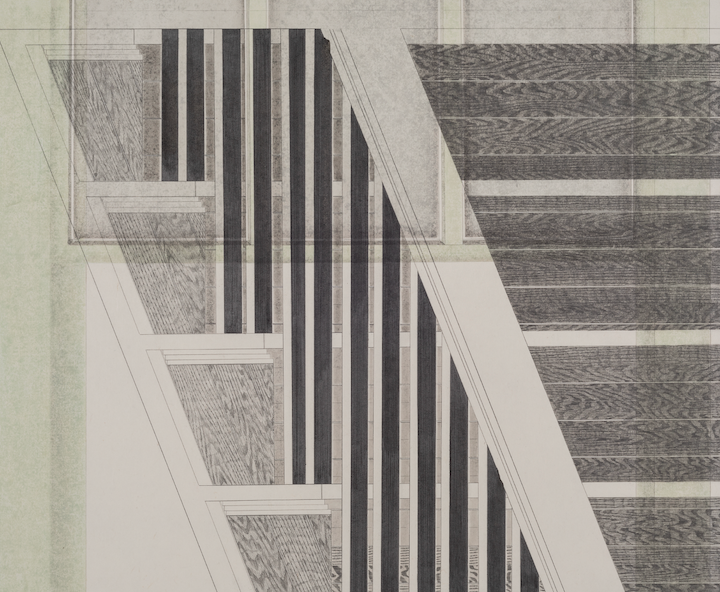
김혜숙은 샤프펜슬을 가지고 근대건축물의 공간과 구조, 건축적 요소들을 해체하고 재구성하는 일관된 작업을 보여주었다. 그가 장지 위에 얇은 샤프심을 끊임없이 덧칠하여 구축한 집은 그래서 예리하고 정밀하고 정확하다. 건축도면을 보는듯한 착각을 불러일으킬 만큼, 섬세하다 못해 완벽에 가까운 재료와 부재 묘사를 보면 그림에 강력한 현실성을 부여하겠다는 작가의 의지가 오롯이 느껴진다. 노동집약적인 그의 작업을 보노라면 자연스레 ‘왜 그리는가?’에서 ‘왜 그려야만 하는가?’로 귀결되는 질문이 떠오른다. 하지만 이 물음 이면에는 반드시 거쳐야 하는 보다 근본적인 두 가지 질문이 존재한다. “왜 근대건축물일까?” 그리고 “왜 샤프일까?” 관객의 시점에서 던진 이 질문의 주어를 작가로 바꾸면, 이는 곧 ‘무엇을 어떻게 보여줄 것인가?’하는 문제로 치환된다.
아이러니하게도 나는 누구보다 작가 자신이 이 질문에 답하기 위해 현재의 작업에 다다르게 되었다는 생각에 든다. 스스로 발견했지만, 동시에 이끌린 것이다. 근대의 양식으로 지어진 오래된 건축의 무엇이 그를 사로잡았을까? 종이 위에 재료를 얹는 것이 아니라 에칭을 하듯 얇은 선을 따라 한 가닥 한 가닥 파내어 새기는 행위는 무엇을 의미할까?
누구나 이름 지을 수 없는 기억의 시간을 가지고 있다. 날 것의 상태로 그냥 묻어두거나, 굳이 꺼내어보지 않은 시간, 혹은 꺼내보기 두려운 시간. 이러한 시간은 어떤 쓸모로서 환원되지 못한 채, 망각의 어디에 뒤엉켜 차곡차곡 쌓인다. 더듬어 보면, 우리는 뚜렷하게 의미를 부여하거나 설명할 수 있는 선택적 기억을 가지고 자아라는 존재의 집을 짓는다. 이성으로 지은 집은 번듯하고 체계적이다. 그러나 이 자아를 지탱하고 있는 무의식이라는 지층은 체계적이지도 균일하지도 않다. 언제 어디서부터 엉켰는지 알 수 없는 기억의 입자들이 뒤엉켜 있다. 그래서 이 지층 위에 지은 집은 사실 불완전하다. 군데군데 알 수 없는 균열들이 있지만 이 균열의 원인을, 시작점을 알 수 없다.
김혜숙이 탐구하는 근대건축의 공간은 어쩌면 스스로 묻어두었던 시간, 뒤엉킨 지층의 다른 모습일지도 모른다. 무엇으로 번역된 적 없는 이 기억 속에서 그가 건저올린 재료들은 현재 눈에 보이는 삶(집)의 균열과 이어져 있다. 버려진 집, 쓸모를 잃은 공간, 이른바 근대건축물로 분류되는 오래된 건축물은 현재 용도가 폐기된 건물이다. 더 이상 그곳에는 사람의 온기도, 잘 나가던 시절의 부흥도 없다. 형태는 있으나 의미를 상실한 공간인 셈이다. 이러한 맥락은 우리가 ‘근대건축’이라 부르는 건축물에 사용된 형태 언어의 특성에 부합한다.
우리의 향수를 자극하는 고전 양식의 건축물들은 서양 역사에 뿌리를 내리고 있다. 건물을 지탱하는 기둥, 보, 계단, 그리고 문, 창, 장식 등 형태 언어들은 기하학에 근거한 완벽한 규범을 따른다. 하지만 우리나라에 지어진 건축의 어휘들은 ‘서양’이라는 구체적인 시공간의 맥락에서 떨어져 나오면서 본래 지닌 의미를 상실한다. 낯선 대한민국 어느 도시에 한복판에 구축된 이 집들은, 그럼에도 근대적 기능의 변용에 충실히 대응하며 긴 시간 생존했다. 이 생존의 증거인 ‘시간성’은 작가 개인의 경험과 해석에 따라 건축 형태에 새로운 문맥과 의미를 부여한다. 그래서 김혜숙이 그림을 그리기 위해 가장 먼저 하는 행위는 연구다. 건축의 역사와 배경을 조사한다. 건축학도도 아닌 그가 아카이브를 구축하듯 탐구하는 데는 불안이라는 기재가 작동하고 있다. ‘미지의 대상’에 대한 접근은 일차적으로 지적 센서를 작동하기 마련이다. 하지만 자신을 끌어당긴 집에 대한 탐구는 지적 울타리를 확보한 다음 구체적으로 감각을 통해 실행된다. 근대건축 요소의 조합을 끈끈하게 묶어주고 지탱하던 규범이라는 연결고리가 기능을 잃고 느슨해지자, 각 부분은 분절적으로 떨어져나간다. 김혜숙은 이렇게 느슨하게 분리된 건축의 형태 언어를 자신의 감각으로 새롭게 재구성한다. 수리된 시점이나 사용자의 기호에 따라 제각각 다른 모습을 한 문고리에서 따온 전시 타이틀처럼, ‘문고리 하나’를 잡는 순간 그가 구축한 세계로 들어가는 문이 열린다.
사실 공간을, 집의 안팎을 인식하는 행위는 단순히 지적 차원을 넘어선 의미를 가진다. 인간에게 집이란 외부와 만나는 첫 세계이자, 자아라는 존재의 집을 구축하는 근원이고 바로미터이기 때문이다. 갓 태어난 아기는 이성이 아닌 신체의 모든 감각을 동원하여 바깥세상과 나를 분리하고 그 경계를 인지한다. 몸을 지탱하는 골격, 신진대사를 관장하는 기관, 이 모든 것을 감싸고 나를 보호하는 최후의 경계막인 피부. 보고, 듣고, 만지고, 디디고, 냄새를 맡아 얻은 모든 정보를 종합하여 존재의 집을 구축하는 것이다. 그래서 집, 나아가 건축은 엄마의 품처럼 한 인간이 성장하는 모든 순간에 관여한다. 다시 말해 집이란 상징적으로 물리적으로 내 몸이 확장된 또 하나의 세계다.
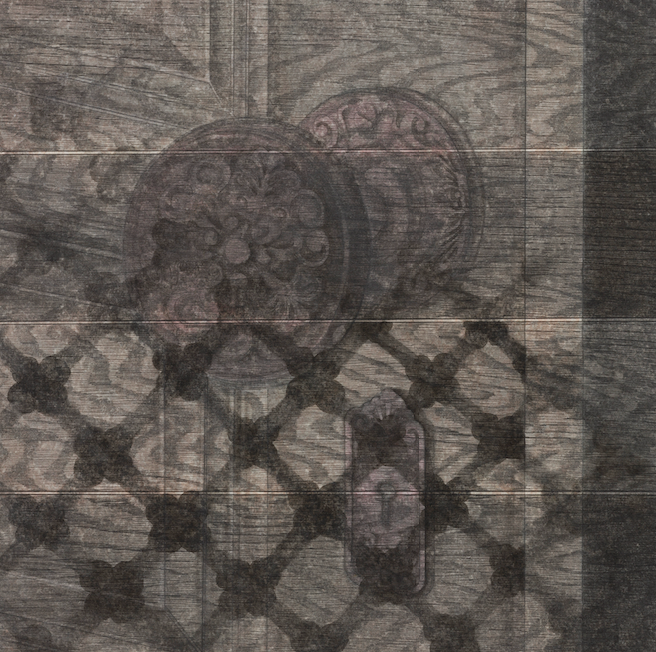
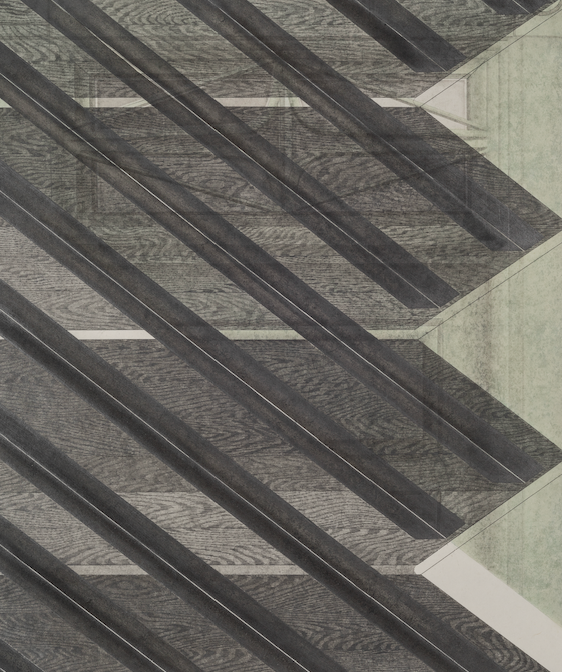
김혜숙이 예민한 ‘감각’을 통해 경험한 근대건축은 스스로 구축해야만 하는, 혹은 대면해야 하는 또 다른 자아의 세계다. 그의 그림에 등장하는 재료의 표현을 보면 자신의 살과 숨으로 얼마나 체화한 재료들인지 짐작할 수 있다. 목재나 벽돌, 장식 등 요소들이 지닌 표면의 생생한 묘사는 그가 이 세계를 인식하는 방식을 드러낸다. 장지 위에 깊게 파내려 가듯 샤프펜슬을 눌러 그린 목재의 표면은 손끝으로 나뭇결을 하나하나 쓰다듬듯 강렬한 감각을 상기시킨다. 그에게 샤프펜슬은 감각적 경험을 드러내는 구체적인 방식이었을 것이다.
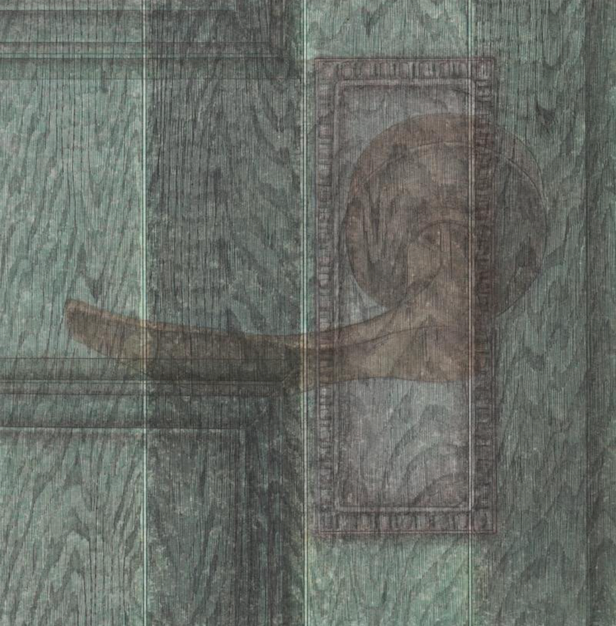
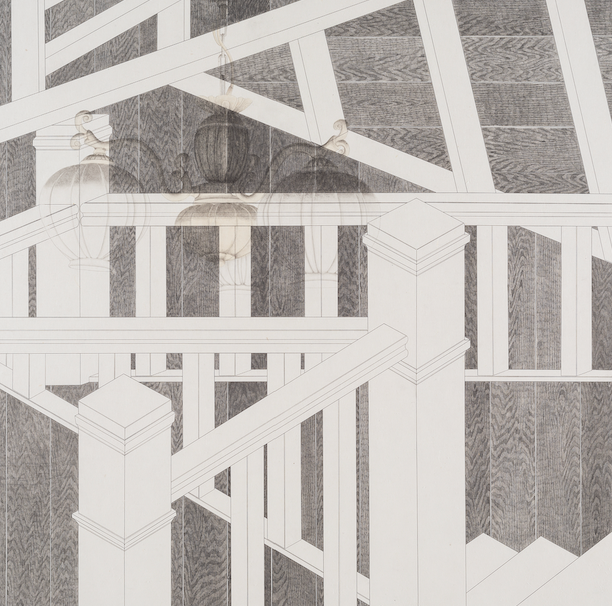
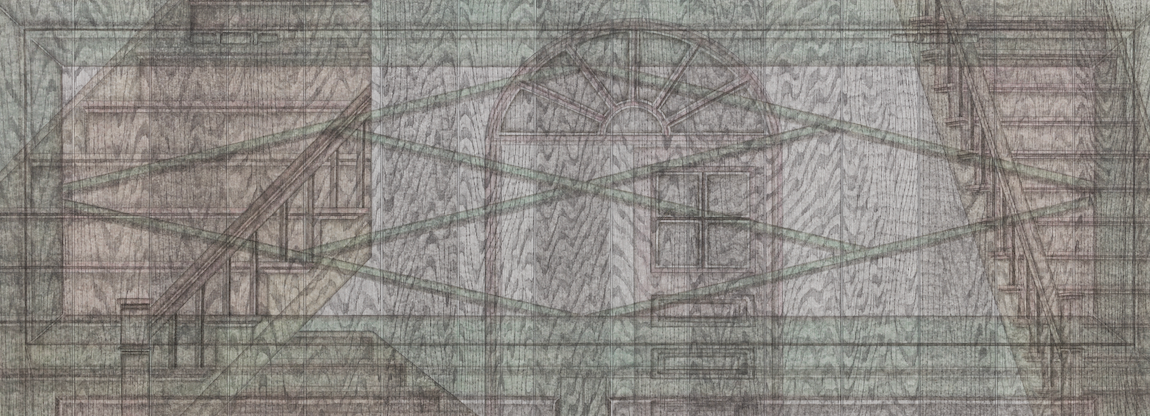
여기서 주목할 점은 보여주는 방식의 변화다. 벽, 기둥, 계단, 트러스 등 초기작에서 다양한 시점에 맞춰 공간의 얼개를 갖추고 재구성되던 요소들은 거대한 하나의 구조체 형태에서 점차 해체된다. 얽힌 구조물은 원형을 떠올리기 힘들 정도로 초현실적인 공간을 창조한다. 보통 우리가 건축 공간을 경험하고 인지하는 과정은 시퀀스라 불리는 일련의 시간 순서를 따른다. 밖에서 안으로, 혹은 안에서 밖으로 흐르는 시선의 이동은 공간의 깊이를 따라 한 편의 영화를 보듯 펼쳐진다. 하지만 김혜숙이 재현한 공간에는 시간상 선후나 공간의 깊이를 상실한 상징적 요소들이 화면을 채운다. 이 요소들은 평면적으로 겹치며 물성을 섬세하게 드러낸다. 문과 계단, 창과 트러스 등 최소한의 요소들이 한 화면에 오버랩되는데 이러한 시퀀스의 압축은 시공간을 비튼다. 이를 가능하게 한 표현이 바로 근작에 사용된 색이다. <문고리 하나, 악수 한번>에서 작가는 조심스럽게 낮은 채도의 색을 한겹 한겹 덧발라 채도를 올린다. 이는 동양화에서만 재현할 수 있는 시간을 머금은 기법이다. 샤프펜슬 드로잉 위에 색을 올리자 보다 서사적이고 입체적인 새로운 시공간이 구축된다. 극사실의 표현과 기억 속의 환영이 감각을 통해 오버랩되는 기이한 장면이 연출되는 것이다.
처음 근대건축에 영감을 받아 그림을 그리기 시작할 때, 작가는 굉장히 불편한 감정을 느꼈다고 한다. 그림을 그리는 업을 유지하기 위해 숙명처럼 이 도시 저 도시를 유랑하면서 그때마다 만난 근대건축은 그에게 낯설지만 익숙한, 몰라서 두렵지만 결국엔 이해하고 싶은 대상이었다. 죽은 듯 살아있는 듯한 존재와의 긴 싸움은 자신의 또 다른 표상이기도 했다. 현실 이면에 살고 있는 자아의 목소리를 따라 결국은 마주해야만 했던 공간은 결국 작가의 몸에 각인된 긴 시간의 지층과 맞닿아 있었다.
김혜숙은 청주에서의 작업을 돌아보며 이제야 그림 그리는 과정이 편안해지고, 재미를 느끼게 되었다고 말했다. 거대한 자아의 무의식의 시간을 캐묻고 마주하는 것은 불편한 일이다. 하지만 결국 나를 세우는 것은 바깥의 세상이 아니라 내 안에 파묻혀 있던 어떤 자원을 발견하고 앎으로 가능하다. 폐허의 공간에서 건져 올린 재료들로 새롭게 구축한 감각의 집은 많은 것이 쉽게 버려지고 잊히는 현실에서 자신을 기억하고 기록하는 방식이자, 이해하고 극복하는 방식이다. 조심스럽고 낮게 우리를 향해 악수를 청하는 그의 그림에서 누군가는 잊었던 유년의 집을, 혹은 지금 다시 기록해야할 어떠한 집을 떠올릴지 모른다. 혹은 어느새 어긋나버린 삶의 균열의 시작점을 찾을 수 있을지도.

A handshake asked to me, in search of a house of senses
By Bang Yukyung/Independent Curator
With mechanical pencils, Kim Hyesook has been showing consistent works while dismantling and reconstructing spaces, structures and architectural elements of modern buildings. For this reason, the house built by painting over the paper with thin mechanical pencils are sharp, precise and exact. Observing the near perfect materials and framework materials giving an illusion of an architectural drawing, we soon come to perceive the artist's firm will to give a powerful sense of reality to the drawing. In front of her labor-intensive work, it is natural to ask a question first, 'Why does she draw?" Then this question suddenly changes to "Why does she have to draw? However, on the other side of this question, there are two more fundamental must questions. Why then does she draw the modern buildings?" and "Why does she use mechanical pencils only?" If we change the subject of this question asked from the perspective of a viewer, it is replaced with the question, "What and how should I show?"W
Ironically enough, I come up with an idea that Kim Hyesook arrived at today's work only to answer this question. She discovered it by herself but she was attracted to it at the same time. What element of old architecture built based on the modern style could have captivated her then? What could this etching-like act of digging and carving one by one along the thin lines. without putting materials on the paper possibly mean?
Anyone has some unnameable time of memory. The time buried in an untouched state, the time which had never been taken out, the time you are afraid of taking out... this kind of time is tangled in somewhere of oblivion, without being able to turn into some usefulness. Thinking deeper, we build the house of being called ego, with a selective memory which can give or explain a meaning with clarity. A house built based on reason or rationality is firm and systematic. However, the stratum called unconsciousness supporting this ego is not systematic nor uniform. The particles of memory, twisted in chaos are entangled everywhere. For this reason, the house built on top of this stratum is imperfect. There are some inexplicable cracks in patches, but we never know when and how the cracks started.
The space of modern architecture explored by Kim Hyesook In fact probably be a different aspect of time she herself buried once, has a namely, the entangled stratum. The materials she pulled out of a hous the memory which has never been translated into anything are connected to cracks of currently visible life (house) though. The of bei abandoned houses, spaces with lost usefulness and the old buildings classified as modern buildings are the ones with abolished usage. There is no longer such a thing like human warmth or prosperity of the glorious age in the place. Only the shape is left yet with the lost meaning. This context coincides with the features of a form language used for the building we call "modern architecture."
The buildings with a classical style evoking our nostalgia are rooted the Western history. The formative languages (elements) such as pillars, crossbeams and stairs supporting the building as well as doors, windows and decoration conform to perfect geometry-based norms. However, the grammar of buildings constructed in our country lost the original meaning when it began breaking loose from the concrete context of time and space called 'the West. Despite this, these houses built in the center of a city of an unfamiliar country, South Korea faithfully responded to the transformation of modern functions and persisted for a long time. The 'temporality' as a proof of this survival gives a new context and significance to the architectural form according to the artist's experience and interpretation. For this reason, the first thing Kim Hyesook does for drawing is research. She inquires into the history and background of architecture. Not even as an architect, she continues with her research as if she were constructing archives. This all comes from the mechanism of anxiety. The primary approach to 'an unknown object' naturally requires the operation of an intellectual sensor. However, the inquiry into a house which attracted the artist can be concretely carried out through senses after having secured the intellectual fence. When the link called norms, which used to firmly bind and support the combination of elements of modern architecture, lost its function and loosened, each part falls apart in fragments. Kim Hyesook newly reconstructs the form language of architecture, loosened and separated, through the senses of her own. Like the exhibition title picked up from a door handle with different aspects according to the repaired time or the user's taste, a door to a new world constructed by her opens as soon as grabbing 'one door handle."
In fact, the act of recognizing in and out of a space and a house has a meaning beyond a mere intellectual dimension. It is because a house for humans is not only the first world after the maternal womb, but also an origin and a barometer constructing a house of being called “ego”. A new-born baby gathers all physical senses and not rationality to separate himself / herself from the outer world and recognize the boundary. The baby constructs the house of his/her existence by collecting all data obtained from frame to support the body, organs in charge of metabolism, the skin as the final limiting membrane protecting him / her as well as senses acquired from seeing, touching, stepping and smelling. Therefore, a house, furthermore architecture involves every stage of human growth like a mother’s arms. In other words, a house is another world of my extended body in a symbolic and physical way.
The modern architecture Kim Hyesook experienced through her acute "senses" can be considered a world of another ego she has to construct or face by herself. Looking at the expression of materials appeared in her painting, we will soon notice that they are the substances imbued with her "flesh and breath," every fiber of her being. The vivid description of surface of elements such as wood, bricks and decoration shows the way she recognizes the world. The wood surface with a drawing of pressed mechanical pencils with deep carving on the paper reminds us of intense senses as if the fingers were stroking the wood grain one by one. For the artist, the mechanical pencils must have been a concrete method to reveal the sensory experience.
Here, we are to pay attention to the change of the way of displaying. The elements which were reconstituted with the framework of space according to different perspectives in her early works such as wall, pillars, stairs and truss start to be gradually dismantled from the form of a huge structure. The entwined structure creates a surreal space to such an extent that the original form is hard to figure out. The normal process of experiencing and recognizing an architectural space follows a series of time order called 'sequence." The movement of gaze flowing from outside to inside and vice versa spreads as a movie according to the depth of the space, Nonetheless, the space recreated by Kim Hyesook is filled with the symbolic elements of which the order of time or depth of space has vanished away. These elements overlap in the two-dimensional manner showing the delicate physical properties. The minimum elements such as doors, stairs, windows and truss overlap in one screen, and this compression of sequence twists time and space. The expression that permitted this was the color used in her recent work. In (Knock, Knock.) she gently paints over the low-chroma color layer by layer to intensify chroma. This is a time-keeping technique only represented by the Oriental painting. When the color is put on the mechanical pencil drawing, a descriptive and three-dimensional space-time is newly constructed. In other words, this creates some bizarre scene of which the hyperreal expression and illusion of memory overlap through senses.
She confesses that she felt quite uncomfortable when she first started drawing inspired by the modern architecture. She met modern architecture while roving around from one city to another as a vagabond, as a fate to continue with her mission of drawing. For her, modern architecture was an object unfamiliar yet familiar, and an object of fear for lack of knowledge of it yet an object she wanted to understand in the end. The long fight against the being alive yet with a dead facet was another symbol of herself though. The space she had to face following the voice of her ego living on the other side of reality is ultimately reaching the stratum of a long time deeply carved in her body.
Reflecting on her works at Cheongju Art Studio, Kim Hysook comments that she finally find the process of drawing comfortable and fun. In effect, it is uncomfortable to weigh time of unconsciousness of a huge ego and face it, However, what makes me stand up is not the outer world but the discovery and knowledge of some resources deeply buried inside of me. The house of senses newly built with materials pulled up from the ruined space is not only a way of remembering and recording oneself but also understanding and overcoming oneself in the reality of which many things are easily abandoned and forgotten. In front of her painting asking a handshake to us in a careful and soft manner, we might recall a forgotten house of our childhood or a certain house requiring a new record. Who knows if we can find a starting point of the crack of our misaligned life in spite of ourselves.